Last week the US DOE awarded $39.8 million worth of funding for more than a dozen application development projects aimed at exascale computing. A total of 15 proposals were funded, with an additional 7 receiving seed funding. The awards represent the first significant sum of federal money directed at developing exascale applications in the US.
NVIDIA has unveiled the Tesla P4 and P40, two new GPUs aimed at the very latest AI machinery. The processors are based on the companys Pascal architecture and incorporate new features aimed at deep learning inferencing work in areas likeimage and speech recognition, language translation, and recommendation engines. The announcement was made at NVIDIAs GPU Technology Conference taking place in Beijing, China this week.
Addison Snell and Michael Feldman ponder the various mergers and acquisitions shaking up the HPC industry.
The rumors about a setbackin the development of Japans first exascale system have apparently been borne out. This week at the HPC User Forum in Austin, Texas, Dr. Yutaka Ishikawa, project lead for the Post-K supercomputer at RIKEN, admitted the effort will be delayed by one to two years.
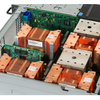
IBM has unveiled what is probably the most powerful server the company has ever offered and one of the most computationally dense on the planet. The new S822LC for High Performance Computing, as it is called, is equipped with two IBM Power8 processors and four of NVIDIAs latest Tesla P100 GPUs. As such, IBM is first OEM to go to market with Pascal GPU-accelerated servers incorporating NVLink technology.
ALA Services LLC has acquired long-time HPC player Adaptive Computing for an undisclosed sum of money. Adaptive will be run as an independent entity under the new ownership and retain the management structure of the current regime, including CEO Marty Smuin.
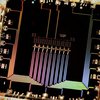
Over the years, there have been a torrent of breakthroughs in quantum computing research. But for the first time since in many years, the technology looks to be on the verge of fulfilling its promises. Thanks to an ambitious effort at Google, quantum computing may become a reality within the next two or three years. A report at the New Scientist unravels Googles plans to commercialize the technology and attain what the company is calling quantum supremacy.
Addison Snell and Michael Feldman discuss the highs and lows of artificial intelligence this week as IBM and Facebook make waves.
IBM Watson has added another skill to its resume: film editing. The cognitive computing wunderkind has produced the trailer for Morgan, a sci-fi horror movieabout an AI lab experiment run amok. The resulting trailer is quite slick.
Pittsburgh Supercomputing Center (PSC) has announced its newest supercomputer, known as Bridges, is up and running. According to the press release, the system entered production in July and already supports about 400 research projects across its university network.