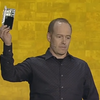
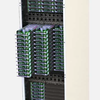
Microsoft has revealed that Altera FPGAs have been installed across every Azure cloud server, creating what the company is calling the worlds first AI supercomputer. The deployment spans 15 countries and represents an aggregate performance of more than one exa-op. The announcement was made by Microsoft CEO Satya Nadella and engineer Doug Burger during the opening keynote at the Ignite Conference in Atlanta.
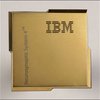
TrueNorth, IBMs brain-like microprocessor, has been found to be exceptionally proficient at inference work for deep neural networks. In particular, the chip has demonstrated its especially good at image recognition, being able accurately classify such data much more efficiently, from an energy perspective, than traditional processor architectures, suggesting new applications in mobile computing, IoT, robotics, autonomous cars, and HPC.
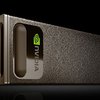
BenevolentAI, a London-based artificial intelligence company specializing in health and bioscience applications, has acquired NVIDIAs DGX-1, a deep learning system accelerated by eight Tesla P100 GPUs. The company plans to use the $129,000 machine to advance its work in drug discovery and related biomedical research.
On November 12-13, High Performance Computing developers will descend on Salt Lake City, Utah for the 2016 Intel HPC Developer Conference just prior to SC 16. As in past years, Intels 2016 conference agenda is packed with keynotes, learning sessions, and hands-on labs hosted by global leaders in the supercomputing field.
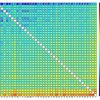
Researchers at the University of Basel in Switzerland have used machine learning to predict the thermodynamic characteristics of 90 new mineral compounds with potential commercial use. The machine learning models were able to predict the chemical stability of all possible iterations of a particular type of class of crystals several orders of magnitude faster than if the researchers had relied on quantum mechanical calculations.
The path to exascale computing hasnt been an easy one. It has had to face a daunting set of challenges in energy efficiency, application parallelism, and system reliability, just to name a few. The difficulties in bringing the hardware and software up to this level is considerable, but there is a more fundamental challenge at the heart of exascale: doing the necessary work of building an ecosystem that will last for a decade or more, not just for a handful stunt machines.
Addison Snell and Michael Feldman analyze this week's top stories in HPC.
The Texas Advanced Computing Center in Austin has installed the worlds largest solar-powered HPC system. The 400 teraflop supercomputer, known as Hikari, is an HPE Apollo 800 cluster that uses technology supplied by Japanese green energy specialist NTT FACILITIES. In addition to taking advantage of Austins abundant sunshine, the power setup also employs high voltage direct power (HVDC) to further reduce energy consumption.
In these days of Apple Siri, Amazon Alexa, and Google Now, AI-based speech generation has become a commonplace technology in everyday life. But when machines talk to us, its still obvious that we are listening to a computer, and not a human voice. Thanks to new machine learningtechnology from Alphabet'sDeepMind, that may soon change.
Aquila, a system provider based in Albuquerque, New Mexico, has unveiled a new liquid-cooled server platform that offers one of the densest and most energy-efficient architectures in the market. The platform, known as Aquarius, uses a patented warm water cooling technology along with rack-level power distribution to minimize energy consumption and allow for very high levels of computational density.