The Edinburgh Parallel Computing Centre (EPCC) is renting out its new 2,016-core Cirrus supercomputer for businesses in need of on-demand HPC. The system, an SGI ICE XA cluster, is being offered to commercial firms for applications in automotive, aerospace, energy, oil and gas, general engineering, life sciences and financial services for what appears to be a very reasonable price.
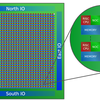
This week, Adapteva CEO Andreas Olofsson announced his company has taped out the Epiphany-V, a 1024-core RISC chip that will likely offer the worlds best performance per watt for double precision arithmetic. This SoC is geared for high performance computing (HPC) in applications such as self-driving cars, autonomous drones and cognitive radio, where performance-per-watt is the most critical attribute.
Episode 142: Addison Snell and Michael Feldman dissect the week's top HPC stories.
If youre a transgender political activist located in the small mountainous kingdom of Nepal, how do you get your story out to the global community? Well if your name is Bhumika Shrestha, you use some of the most advanced information technologies from IBM, Google, Facebook, and Amazon to create a web platform for talking to the world.
Amazon Web Services (AWS) has announced the availability of a new GPU computing instance based on NVIDIAs Tesla K80 devices. With up to eight K80s per instance, the web giant has leapfrogged its cloud competition with the most GPU-dense configurations in a public cloud offering.
In a year in which a woman has a good chance of becoming the leader of the free world, talk of gender diversity has become pervasive. Even in the secluded confines of the HPC community, discussions of the underrepresentation of women in supercomputing has become a real topic, and at no time has this become more apparent than in the run-up to SC16.
The Jlich Supercomputing Centre has installed a couple of HPC systems to support neuroscience applications as part of special EU-funded procurement for the European Human Brain Project (HBP). The two machines, JURON, from IBM, and JULIA, from Cray, are pilot systems that will be used evaluate technologies and architecture for a much larger HBP supercomputer down the line.
At NVIDIAs first European GPU Technology Conference (GTC Europe) taking place in Amsterdam this week, CEO Jen-Hsun Huang announced a number of new users of the DGX-1 GPU-powered supercomputer in a box. Huang also teased attendees with an early look at one of their next-generation Volta GPUs designed to power self-driving cars.
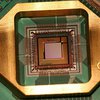
Quantum computing pioneer D-Wave Systems has announced some details of a new 2000-qubit system it has developed. The processor that drives the system will contain twice the number of qubits that powers the current D-Wave 2X system, which was announced last year. The new hardware also includes additional control features that enables users to tune the quantum computations to arrive at a faster result and to explore the solution space more fully.
Episode 141: Addison Snell reviews the big stories from some of the week's HPC conferences.