Intersect360 Research has released its latestfive-year forecast that projects spending on high performance computing from now through 2020. The report covers the gamut of HPC offerings, including servers, storage, networks, cloud computing, and other services.
The commercialization of artificial intelligence over the last several years is now getting the attention of governments, which are starting to think about the policy implications presented by these new technologies. A recent report published by the White House attempts to address the challenges presented by AI, but skirts one very important issue.
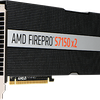
Advanced Micro Devices (AMD) has announced a partnership that will bring its Radeon GPUs into the Alibaba Cloud. The GPUs will be used to power some number of the hyperscalers cloud servers in order to boostadoption of its cloud-based services.
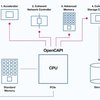
IBM has unveiled OpenCAPI, an open-standard, high-speed bus interface for connecting devices in servers. The announcement coincides with the formation of a consortium of the same name that will manage the new standard, and which initially includes tech heavyweights Hewlett Packard Enterprise (HPE), Dell EMC, NVIDIA, Mellanox, Micron, Xilinx, and Google. The first OpenCAPI-supported devices and servers are expected to show up in 2017.
Episode 144: Addison Snell and Michael Feldman share their thoughts on Intel's latest chip line and Cray's move into deep learning.
Artificial intelligence received a niceboost in public exposure last Sunday evening when 60 Minutes, CBSs iconic news magazine, aired an in-depth report on the subject. The half-hour segment described how systems like IBMs Watson supercomputer is changing the nature of medical diagnostics, and how other AI technologies are working their way into our everyday lives.
Intel announced it is sampling its Stratix 10 FPGAs, the latest family of field programmable gate arrays that are designed to accelerate a number of datacenter workloads. The new devices, which Intel is calling the most significant FPGA innovations in over a decade, offer advanced features like embedded 64-bit ARM processors, second-generation High Bandwidth Memory (HBM2), and DSP blocks.
As HPC vendors like IBM and HPE have added deep learning-optimized systems to their product portfolio, Cray has been more circumspect about its plans in this area. We talked with Cray CTO Steve Scott about how they view this new application area of high performance computing and what they may have in the pipeline to serve this burgeoning market.
Episode143: Addison Snell and Michael Feldman discuss Adaptiva's breakthrough technology and cloud computing's more robust offerings.
As Moores Law reaches its physical limits with silicon-based semiconductor technology, researchers are turning to more exotic materials to extend its life a few more years. A team of scientists at Lawrence Berkeley National Laboratory (aka Berkeley Lab) did just that by inventing a one-nanometer (1nm) transistor.