In two weeks, the Ethernet Alliance will be talking up its namesake technology and roadmap at SC16 in front of more than 10,000 conference attendees. While Ethernet tends to get short shrift in most HPC circles these days, the November supercomputer conference provides an opportunity for Ethernets backers to remind users that the standards bodies and its commercial adopters have been busy pushing the technology to much faster speeds.
Hewlett Packard Enterprise made it official today, completing the acquisition of SGI that was announced back in August. HPE paid $7.75 per share for SGI, bringing the final purchase price to just over $283 million.
AI startup Graphcore has emerged from stealth mode with the announcement of $30 million in initial Series A funding. The Bristol, UK-based company will use the cash infusion to complete development of its Intelligent Processing Unit (IPU), a custom-built chip aimed at machine learning workloads. The funding was led by Robert Bosch Venture Capital GmbH and Samsung Catalyst Fund; also joining were Amadeus Capital Partners, C4 Ventures, Draper Esprit plc, Foundation Capital and Pitango Venture Capital.
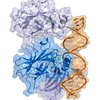
A new report by Texas Advanced Computing Center (TACC), describes how the centers Stampede supercomputer is being used by a researchers to find out how the p53 protein helps prevent cancer cells from developing. The p53 protein is considered one of the most critical natural defenses the body has to protect itself against a wide array of human cancers, which has earned it a great deal of attention from medical researchers and other life scientists.
The prospect of non-volatile DIMMs as an additional memory tier in the server is getting a lot more attention these days. The advent of novel memory technologies like 3D XPoint, resistive RAM/memristors, and NAND-based memory modules, in conjunction with market forces that are demanding much higher memory capacities, lower power usage, and in some cases, memory persistence, are conspiring to drive a new generation of NVDIMM products to market.
Episode 146: Special guests Brad McCredie, IBM, VP/IBM Fellow, leading IBM Power Development and Bob Quinn, Micron, VP of Strategy and Business Development, Compute and Networking Business Unit, join Addison Snell to talk about the potential of IBMs new OpenCAPI consortium.
This week Microsoft released a beta version of its deep learning software package, the Cognitive Toolkit, into GitHub, the popular open source hosting service. The new release, which was announced in a company blog, marks the transition of the toolkit from an internal research project into something Microsoft plans to support for production work into the foreseeable future.
IT giant Fujitsu has been developing a series of in-house technologies aimed at the burgeoning market of artificial intelligence and machine learning. Although the company has made less fanfare of its ambitions in this regard than companies like IBM, Google and Microsoft, the Japanese multinational seems intent on expanding its datacenter business into this new high-value segment.
In-Q-Tel (IQT), the venture capital arm of the CIA and the broader intelligence community, has infused an unknown amount of money into MapD, a startup that offers GPU-accelerated analytics software. IQT joins NVIDIA, Vanedge Capital, Verizon Ventures, and GV (formerly known as Google Ventures) as co-investors in the company.
Episode 145: Addison Snell and Michael Feldman review the happenings at Dell EMC World and the surprises surrounding IBM's OpenCAPI consortium announcement.