Google isnt the only hyperscale company that is developing autonomous vehicles. Chinese internet giant Baidu is also aggressively pursuing this nascent market, albeit with less public fanfare than its American counterpart. This week though, more about the projects inner workings was revealed when Inspur announced that its GPU-accelerated servers had been selected by Baidu as a platform for the companys deep learning image recognition system.
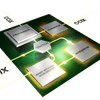
If you happen to think there arent enough interconnect standards for accelerators in the world, then youll be happy to know that one more has been added to the heap. The new technology, known as the Cache Coherent Interconnect for Acceleration (CCIX), is being crafted as an open standard and aims to provide a high performance, cache coherent data link between processor hosts and coprocessor accelerators.
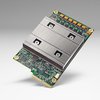
Last week at the Google I/O conference, it was revealed the search giant has been using its own custom-built ASIC to accelerate the machine learning capabilities that now underlies much of the Google cloud. The microprocessor, known as the Tensor Processing Unit (TPU), was designed by Google engineers to speed up the TensorFlow software that the company uses to drive much of its machine learning functionality. TensorFlow began as a machine learning research project, but later moved into production, and is now deployed in an array of applications, including Google Cloud Speech, Gmail, Google Photos, and Search. According to the …
Supercomputer-maker Cray has introduced Urika-GX, the companys newest version of its enterprise-focused data analytics product line. With an emphasis on agility, the system merges the functionality of the existing Urika-GD and Urika-XA appliances, which provide platforms for graph-based and Spark/Hadoop-based analytics, respectively. Urika-GX wraps both of these capabilites into a single box, and does so largely with standard hardware and software.
The Times of India is reporting that the country will begin building a new series of domestically produced supercomputers, the first of which will be installed in August of 2017. The Rs 4,500-crore (about $670 million) project is being managed by the Centre for Development of Advanced Computing (C-DAC).
Addison and Michael analyze the week's big HPC news.
The World Community Grid (WCG) has been recruited to tackle the Zika virus, one of the fastest-spreading and most dangerous viruses in recent memory. The project, known as OpenZika, will use WCG computing resources to identify candidate drugs that exhibit anti-viral properties against the Zika organism.
Until fairly recently, Japan was the only country in the world with a definitive roadmap to its first exascale supercomputer. But over the last three months, specific plans for exascale systems in China, France, and the US have been revealed. If those schedules hold, between 2020 and 2023, all four countries will stand up their first exascale machines. The race to the next supercomputing milestone is finally starting to take shape.
IBM Research has demonstrated an advancement in phase change memory (PCM) that moves the technology closer to its potential of a universal memory. PCM is a technology that takes advantage of the unique amorphous-crystalline phase change properties of chalcogenide glass to store memory bits in a non-volatile manner. IBM has devised a unique variant that is able to store 3 bits of data per cell, enabling much denser storage arrays to be built.
HPC specialist DataDirect Networks (DDN) has introduced Flashscale, a new all-flash storage solution aimed broadly across the high performance computing, enterprise/big data, and web/cloud markets. DDN is positioning the product for scale-up and scale-out storage installations, which implies customers with extra-large data sets. It is DDNs first pure flash offering and joins a growing list of such products from other storage vendors.