In an industry as forward-leaning as high performance computing, the focus on exascale and buying machines with the maximum amount of FLOPS hardware can be a distraction. The average HPC user is just looking to find the best performance possible for their applications with the hardware at hand. And in more cases than we would like to think, sometimes that hardware is just a personal computer.
The well-worn adage that a picture is worth a thousand words rings true when communicating the importance, content, and yes, the beauty that is uncovered as researchers explore how the brain works. Given that humans are wired to understand images faster and better than other forms of communication, brain research highlights the importance of scientific visualization
The UK and the rest of Europe may be parting ways, but at least the Brits can drown their sorrows in a rather unique way. A new company based in London is now selling beer designed by a machine learning algorithm. The company, IntelligentX, is promoting their new offering as “the world’s first beer brewed by AI.”
Changes are in store for The Machine, the R&D effort at Hewlett Package Enterprise that recasts thecomputer as a memory-centric system. According to a blog post by HPE CEO Meg Whitman, the project, along with HP Labs, the unit that manages the The Machine's development, will be placed under the Enterprise Group. The decision is related to the exit of HPE CTO Martin Fink, who will be retiring from the company at the end of the year.
A team of researchers at MITs Computer Science and Artificial Intelligence Laboratory (CSAIL) has devised a 64-core processor design that tackles the major impediment to utilizing multicore chips: programming them. The novel device, which is known as Swarm, incorporates extra circuitry that makes it much easier for programmers to parallelize their applications. At least thats the claim of the research team.
For the first time, Googles DeepMind machine learning technology is being used in a medical research application, in this case, for the detection of two of the most common eye diseases: diabetic retinopathy and age-related macular degeneration (AMD). If the softwareis as successful in this endeavor as it was with AlphaGo, the DeepMind-powered application that vanquished Go champions Fan Hui and Lee Sedol, ophthalmology may never be the same.
The University of Melbourne has deployed a new type of HPC system that combines both a physical cluster and a virtual one. Called Spartan, the new machine is built around the idea that there are basically two types of HPC users: the so-called power users, who want lots of compute, memory, and bandwidth for long-running applications; and those with more modest requirements, who need to run a plethora of much smaller jobs. Spartan provides resources aimed at both audiences.
If ROSS was an actual human, he would certainly be the highest paid legal assistant in history. He has an encyclopedic knowledge of legal texts, and devours new ones quickly and effortlessly. Better yet, he can work seven days a week, 24 hours a day, and requires no office supplies, health insurance or retirement programs. Yes, ROSS is a computer program and his designation as a male is just one of convenience.
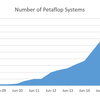
In the latest TOP500 rankings, the number of supercomputers that reached a Linpack petaflop or more grew to 95 systems nearly a fifth of the list. The number of such systems has been growing steadily since IBMs Roadrunner broke the petaflop barrier in 2008. And while machines of this magnitude are still considered elite, hardly a month goes by now without a new system or two being deployed.