Addison Snell and Michael Feldman discuss the top news items coming out of the ISC'16 conference.
One of the most popular sessions at last weeks ISC High Performance conference was titled "Scaling Beyond the End of Moores Law," which was a series of three talks that delved into some of the technology options that could reanimate computing after CMOS hits the wall sometime in the next decade. The subjects popularity is unsurprising, given that the supercomputing digerati that attend this event are probably more obsessed with Moores two-year cadence of transistor shrinkage than any other group of people on the planet.
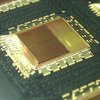
With the launch of the Knights Landing Xeon Phi, Intel is hoping to capitalize on the unmet demand for an alternative to the GPU. The previous incarnations of Xeon Phi werent quite on par with their GPU counterparts in some significant ways, especially in the performance realm. But Knights Landing has made up a lot of lost ground in FLOPS, while offering the convenience of being able to run without the assist of a CPU host.
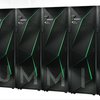
Multiple outlets are reporting that Oak Ridge National Labs (ORNL) Summit supercomputer, one of the three pre-exascale systems being developed for the Department of Energy under its CORAL program, will hit 200 petaflops when it becomes operational in two years. The implication is that the US is responding to the announcement of TaihuLight, the new Chinese supercomputer that captured the top spot on the latest TOP500 list. But the storyline here is a lot more nuanced than that.
ARM has been something of stealth architecture in the battle to unseat the x86 as the dominant platform for high performance computing systems. That lower profile changed this week at the ISC 2016 conference, where Fujitsu announced it would develop an ARM processor for its Post-K exascale supercomputer. But the effort promises to have much a wider impact on the HPC landscape than just a single system.
Intels much-awaited Knights Landing Xeon Phi processor is now being shipped in volume to OEMs and other system providers, who will soon be churning out HPC gear equipped with the new chip. And if there was any doubt, Intel made it clear that with Knights Landing, it would be going after the same set of HPC and deep learning customers that NVIDIA has been successfully courting with its Tesla GPU portfolio. The official launch of the new processor was announced at the ISC High Performance conference (ISC), which is taking place this week in Frankfurt.
Addison Snell and Michael Feldman dissect the top stories from the start of ISC 2016, including the Chinese dominance of the Top500 list.
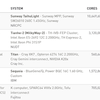
US supercomputing was dealt a couple of blows on Monday after the latest rankings of the 500 fastest supercomputers in the world were announced during the opening to the International Supercomputing Conference (ISC). In the updated TOP500 list, China retained its leadership at the top with a new number one system, while also overtaking the United States in the number of total systems and aggregate performance. This is first time in the lists history that the US did not dominate the TOP500 results in these latter two categories.
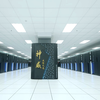
A new Chinese supercomputer, the Sunway TaihuLight, captured the number one spot on the latest TOP500 list of supercomputers released on Monday morning at the ISC High Performance conference (ISC) being held in Frankfurt, Germany. With a Linpack mark of 93 petaflops, the system outperforms the former TOP500 champ, Tianhe-2, by a factor of three. The machine is powered by a new ShenWei processor and custom interconnect, both of which were developed locally, ending any remaining speculation that China would have to rely on Western technology to compete effectively in the upper echelons of supercomputing.
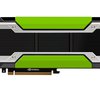
NVIDIA used the opening of the ISC High Performance conference (ISC) on Monday to launch its first Pascal GPU targeted to high performance computing. The announcement follows on the heels of the introduction of the Pascal P100 at the GPU Technology Conference in April, a device which was aimed at the deep learning market. The new HPC GPU, however, differs from its deep learning sibling in some surprising ways.