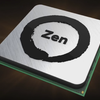
On Wednesday evening, just a stones throw away from where Intel was holding its developer forum in San Francisco, AMD was previewing its upcoming Zen CPU to an audience of analysts and reporters. Zen is AMDs newest x86 microarchitecture, which is in line replace the older Bulldozer design. At the event, the company demonstrated an 8-core version of chip outrunning an Intel Broadwell CPU on Blender, a multi-threaded rendering application.
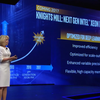
At the Intel Developer Forum (IDF) this week in San Francisco, Intel revealed it is working on a new Xeon Phi processor aimed at deep learning applications. Diane Bryant, executive VP and GM of Intel's Data Center Group, unveiled the new chip, known as Knights Mill, during her IDF keynote address on Wednesday.
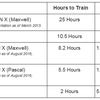
In a blog post by NVIDIAs Ian Buck, the CUDA creator admonished Intel for some of the GPU-bashing the chipmaker engaged in when it launched Knights Landing at the ISC 2016 conference. During the event, Intel rolled out a number of deep learning performance results that cast the NVIDIA hardware in a bad light against its latest Xeon Phi processor. But as Buck pointed out, Intel invariably made those comparisons against older GPU technology.
Addison Snell and Michael Feldman welcome Bill Mannel of HPE to talk about the company's acquisition of SGI.
OpenAI, a non-profit research company devoted to advancing artificial intelligence, has become one of the proud owners of a DGX-1, NVIDIAs so-called supercomputer in a box, a server specifically designed for machinelearning work. The system, which was hand-delivered to the companys headquarters in San Francisco by NVIDIA CEO Jen-Hsun Huang, will be used to run some of OpenAIs most computationally challenging applications.
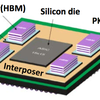
The prospects for significantly faster solid-state storage for serversgot a big boost this past week with Microns introduction of its QuantX-branded 3D XPoint memory-based SSDs and Samsungs preview of its upcoming Z-SSD devices. According to the companies, their respective products will deliver much better performance than conventional NAND-based PCIe SSDs currently used in the datacenter. The announcements were made at the Flash Memory Summit, a three-day extravaganza of all things non-volatile.
HPE has signed an agreement to acquire SGI for $275 million, a deal that will bring together two of the top HPC system vendors under a single corporate master. Assuming the bid clears regulatory hurdles, the acquisition will represent the largest realignment of the HPC server space since IBM sold its x86 server business to Lenovo in 2014.
On Tuesday, Intel CEO Diane Bryant revealed her company was acquiring Nervana Systems, a startup that provides deep learning software, and which was in the process of building a custom chip optimized for those same applications. Intel has been ratcheting up its focus on AI over the past couple of months, starting with the launch of its Knights Corner Xeon Phi processor at the ISC conference in June.
Did AI just save its first life? The University of Tokyo is reporting that Watson, IBMs cognitive supercomputer, has correctly diagnosed a rare form of leukemia in a 60-year-old Japanese woman. Doctors turned to Watson after the patient failed to respond to drugs they were administering. After 10 minutes of crunching the data, the IBM machine correctly diagnosed her ailment and recommended the appropriate treatment.
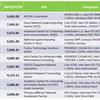
The 19th edition of the Green500 was released today with the usual array of accelerated systems at the top of the list and a plethora of energy-sipping x86 clusters comprising the remainder. For the most part though, energy efficiency gains slowed over the past 12 months after chalking up some pretty impressive gains in previous years.